
If you plan to start a healthier diet in 2026, this guide is a must-read. Today’s market is flooded with various popular diet trends and unreliable nutritional advice, which can be overwhelming. Instead, follow us on a tour of the grocery store as we break down the healthy ingredient selection plans for breakfast, lunch, and dinner one by one—not only will we tell you why these ingredients are high-quality, but we’ll also share cost-effective shopping tips and debunk the myths surrounding so-called “deified” healthy foods.

Breakfast Chapter: Say Goodbye to Misconceptions and Choose High-Quality Ingredients
For post-80s and post-90s generations, we often heard the claim that “butter is harmful, and margarine is healthier” during childhood. But facts have proven this view is completely wrong. Although margarine contains no saturated fat, it is added with processed inflammatory oils such as soybean oil and palm oil, as well as natural flavorings. Current research has clearly shown that the inflammatory properties of these vegetable oils far exceed those of butter, while butter is actually a healthy saturated fat, similar to coconut oil, and is beneficial to the body when consumed in moderation.
However, not all butters are the same. When shopping, keep two key points in mind: fat content and feeding method. American butter has a high water content, with a fat content of about 80%; European butter has a fat content of 83%-85%, with a softer and more mellow taste. If you want to choose butter with the highest nutritional density, prioritize “grass-fed butter”—the packaging will be labeled “made from the milk of grass-fed cows”. Grass-fed dairy products and meats have higher nutritional density, containing more than 500 times the conjugated linoleic acid, as well as more omega-3 fatty acids, vitamin A, and vitamin E, and their taste is also superior to American butter. Recommended choices include Kerrygold, Aldi Irish Grass-Fed, Kirkland Signature New Zealand Grass-Fed, and Vital Farms Grass-Fed Butter.
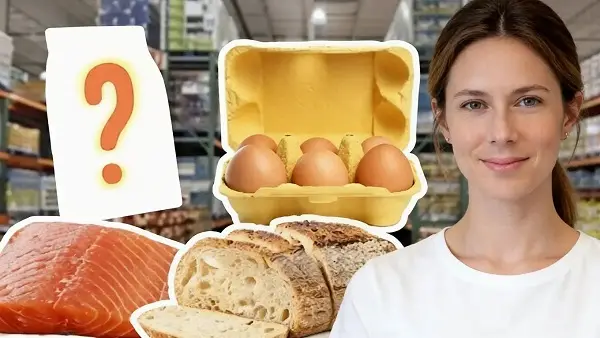
Choosing eggs also requires careful consideration, as not all eggs have the same nutritional value. Affected by avian influenza, egg supplies in some supermarkets are tight, but fortunately, free-range eggs are now widely available. Free-range eggs are not only more friendly to the growth of chickens but also more beneficial to the human body. Labels such as “free-range” and “each chicken enjoys 108 square feet of living space” mean that these chickens live outdoors all year round, feeding on insects, worms, and grass, with only a small amount of grain feed supplemented.
On the contrary, labels like “cage-free” and “free-range” are mostly marketing gimmicks. Chickens laying these eggs are actually raised in large warehouses holding 50,000 chickens, with no freedom at all. From a nutritional perspective, free-range eggs contain twice as much omega-3 fatty acids as ordinary eggs, three times as much vitamin E, and seven times as much beta-carotene. They also have great advantages in cost-effectiveness: an 18-count carton of free-range eggs costs about $10.29, which is only 57 cents per egg, or about $6.86 per dozen. Compared with cage-free eggs at $6.69 per dozen and “free-range” eggs at $6.49 per dozen, you only need to spend a few cents more to get richer nutrition. In addition, the yolks of free-range eggs are brighter orange and firmer in texture, which can be distinguished at a glance.
The bread section is a veritable “disaster zone”. To avoid pitfalls, remember the core principles: reject refined flour, prioritize whole grains, no added sugar (or natural sweeteners), and high fiber. Many seemingly healthy breads, such as honey wheat bread, actually use “enriched flour”—wheat is stripped into simple grains, and then synthetic vitamins are added to make up for the nutritional loss. Such bread should be put back on the shelf immediately. At the same time, be wary of excessive ingredients, such as bread with 2 grams of added sugar per slice, containing soybean oil and preservatives, and bread labeled “15 grains” but containing industrial processing ingredients such as monoglycerides.
Genuine healthy bread either contains no refined flour at all, made from whole grains, nuts, and seeds; or even if it contains sweeteners, it only uses natural ingredients such as organic fruit juice, honey, and molasses, with no more than 1 gram of sugar per slice. More importantly, healthy bread has sufficient fiber content, up to 4 grams per slice, which can effectively enhance satiety. Aldi’s sprouted bread is an excellent choice, and more recommended brands can be found in the relevant list.
Beverage Chapter: Avoid Additives and Toxins for Healthy Drinking
Drinking a cup of coffee after lunch is a habit for many people, but there are great particularities in the way of drinking. Prioritize freshly ground coffee or whole coffee beans, and avoid pod coffee and flavored coffee. Flavored coffee, such as caramel-flavored coffee, mostly contains artificial flavorings—the U.S. Food and Drug Administration (FDA) stipulates that artificial flavorings must be completely artificially synthesized, have no connection with natural flavors, and some even come from petroleum. Even if labeled “natural flavor”, it is mostly marketing talk, not truly natural. It is recommended to choose single-origin coffee, such as Target’s Sumatra Single-Origin Coffee, which is healthier to make at home.
Pod coffee not only has poor coffee quality but also has potential safety hazards in packaging. The aluminum top and plastic body of the pod will release metals and toxins into the coffee when brewed with boiling water. The inventor of the pod even regretted creating this product, which was originally intended only for office use but became popular worldwide due to its convenience. If you insist on using a pod coffee machine, you can buy stainless steel reusable pods on Amazon and fill them with your favorite coffee grounds.
The choice of creamer also requires caution. Common creamers on the market contain corn syrup solids, hydrogenated soybean oil, and preservatives, which are harmful to health. It is recommended to replace them with milk, heavy cream, half-and-half, or almond milk. For tea, try to avoid tea bags—99% of tea bags are made of bleached chlorinated paper, plastic, or rayon, which will release harmful substances when brewed with boiling water. It is recommended to use loose-leaf tea and brew it with a stainless steel filter. For example, jasmine green tea can be enjoyed after brewing for 4 minutes, which is healthy and fragrant.
Grain Chapter: Reject Overpriced Junk Food and Choose Pure Oats
Many grain cereals seem healthy but are actually overpriced junk food. Take Special K Fruit Yogurt Cereal as an example, which sells for $5.29 per pound. Although it contains whole-grain wheat, each serving has as much as 12 grams of added sugar (about 3 teaspoons), and the added vitamins and minerals are all synthetic ingredients.
A better choice is organic oats, which are not only cheaper (about $3.79 per pound) but also rich in nutrition. Organic oats have no added sugar or synthetic nutrients, and each serving contains 4 grams of fiber, which can promote intestinal peristalsis and enhance satiety. As a breakfast grain, oats are a nutritional “powerhouse”—each serving can provide 90% of the daily required iron, 177% of zinc, and 145% of thiamine, making them an ideal choice to start the day.
Lunch Chapter: Cost-Effective High Protein, Convenient and Healthy
The canned food section hides many cost-effective healthy ingredients, especially suitable for making lunch. Tuna is an excellent choice, with extremely high nutritional density and protein content, and affordable prices. Each 2.6-ounce can of tuna contains 18 grams of protein. Protein can not only build muscle, promote muscle recovery, and speed up metabolism but also stimulate the intestines to naturally secrete GLP-1 hormones (similar to the effect of drugs such as semaglutide), enhancing satiety for a long time.
In terms of cost-effectiveness, a 2.6-ounce can of tuna at 99 cents is equivalent to about $6 per pound, far lower than the price of fresh fish at $15-20 per pound. You only need to pair it with healthy mayonnaise to quickly make a high-protein lunch. If you don’t like tuna or are worried about mercury content (small chunks of light tuna and bonito have lower mercury content), you can choose wild Alaskan pink salmon—each 2.5-ounce can contains 15 grams of protein. Wild salmon has much higher omega-3 fatty acid content than farmed salmon and is safer in mercury content, equivalent to about $10 per pound, cheaper than fresh wild salmon. It can be made into salmon salad or fish cakes.
Turkey sandwiches are also a common lunch choice, but the quality of turkey varies greatly. Ordinary deli turkey adds harmful ingredients such as genetically modified corn starch, 1 gram of added sugar, sodium phosphate preservatives, carrageenan (an inflammatory stimulant), and natural flavorings. A better choice is turkey products with a clean ingredient list, such as Applegate Turkey Breast, whose ingredients only include turkey, sea salt, rosemary broth, and potato starch; if the budget allows, you can choose organic products, made from turkeys fed with organic non-genetically modified grains. A 6-ounce package costs $5.89, and a regular 7-ounce package costs $6.29. Although the price is slightly higher, it can avoid harmful preservatives and flavorings. Costco’s three-pack turkey is a cost-effective choice, which has been re-launched after being out of stock for a year and a half and is very popular.
Want a snack occasionally? The key to choosing potato chips lies in the oil. Most potato chips on the market use vegetable oils (safflower oil, sunflower oil, rapeseed oil, etc.), which are cheap inflammatory stimulants. Studies have shown that reducing the intake of seed oils and sucrose can solve 90% of health problems. If you want to eat potato chips, prioritize those fried in avocado oil—avocado oil is not a seed oil, has low inflammatory properties, and is a healthier choice.
Here, we share a practical tool: the free “Bobby Approved” app. When shopping in the supermarket, you only need to scan the product barcode to quickly determine whether it meets healthy standards. If not, it will highlight harmful ingredients, explain the reasons, and recommend alternative products. It can be downloaded from the Apple App Store and Google Play Store.
Dinner Chapter: Remember “You Are What You Eat’s Food Eats”
The core principle for choosing dinner ingredients is “You are what you eat’s food eats”, and the most typical examples are beef and salmon. For beef, there is a huge difference between 100% grass-fed beef and 100% grain-fed beef. Grass-fed beef comes from cattle that feed on grass all their lives, while grain-fed beef comes from cattle that feed on genetically modified grains. Grass-fed pastures are more environmentally friendly and can achieve carbon neutrality, and grass-fed beef is more nutritious—it contains twice as much conjugated linoleic acid as grain-fed beef, five times as much omega-3 fatty acids, and seven times as much vitamin A.
There is no need to overly pursue the “organic” label when buying grass-fed beef. 100% grass-fed means that the grass eaten by the cattle has not been sprayed with pesticides such as Monsanto glyphosate, and the “organic” label is mostly an additional marketing cost. Target’s 2-pound package of grass-fed ground beef sells for $10 ($5 per pound), and organic grass-fed beef is $8.49 per pound, with a significant difference in cost-effectiveness.
When choosing salmon, you also need to look for “wild”. Wild salmon has a deep pink flesh due to its natural diet; farmed salmon needs to be dyed with beta-carotene added to the feed, otherwise, the flesh will be gray. Nutritionally, wild salmon contains three times as much omega-3 fatty acids, three times as much iron, and four times as much calcium as farmed salmon, making it a better choice.
Conclusion
To have a healthy diet in 2026, there is no need to blindly follow popular diets. You only need to remember: choose natural ingredients that can be clearly identified as real food. Avoid processed inflammatory oils, synthetic additives, and unnecessary marketing gimmicks, and you can easily start a healthy eating journey. Follow our channel, and we will update similar healthy eating guides every week. Subscribe to get the latest content as soon as possible. Now, take this guide to the grocery store and start shopping!